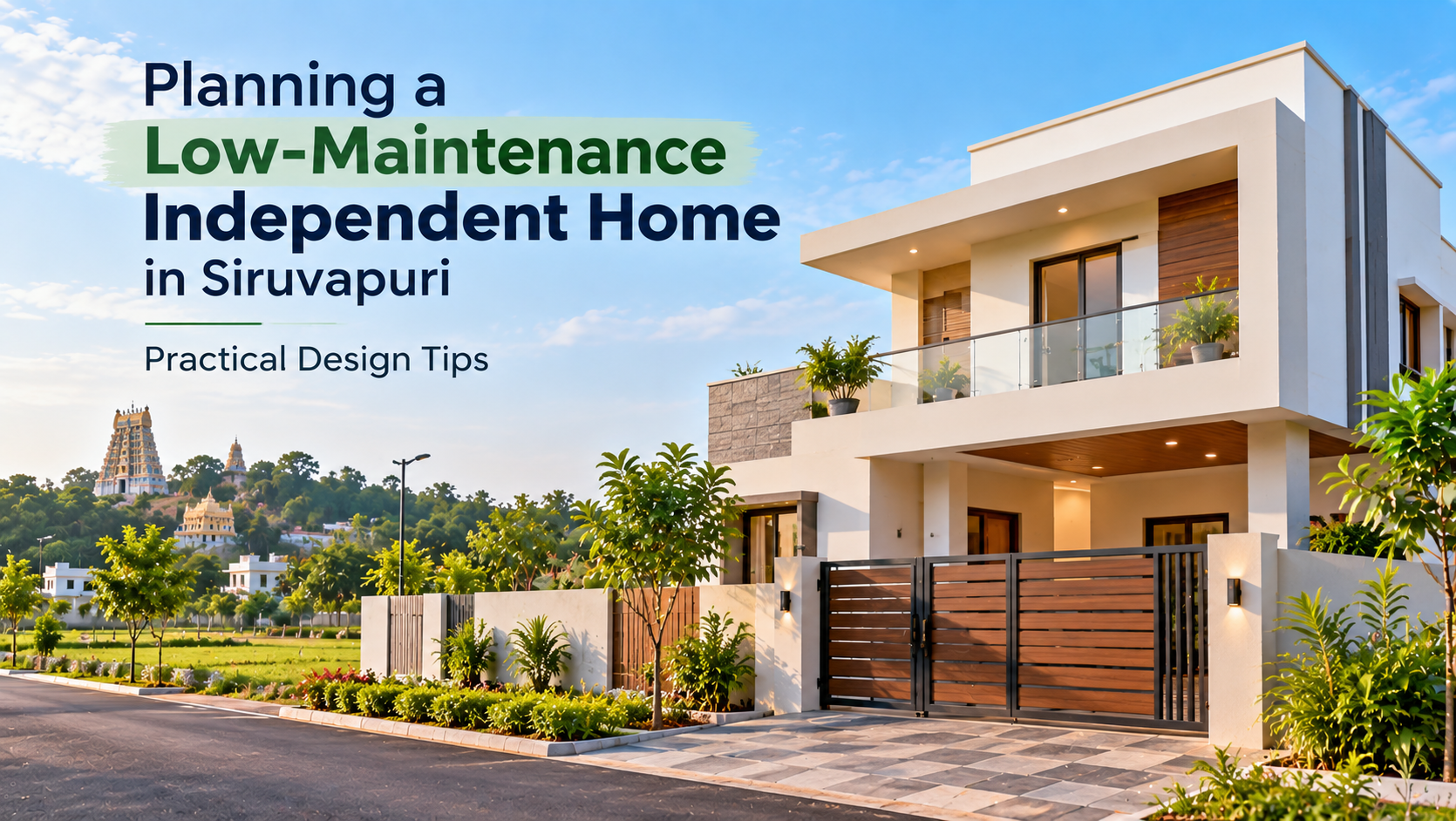
Building an independent home gives families the freedom to choose their preferred layout, materials and living spaces. However, designing a house is not only about how it looks when construction is complete. It is equally important to consider how easily the property can be maintained over the years.
A home that requires frequent repairs, complicated cleaning or constant attention to outdoor areas can become expensive and time-consuming to manage.
For families planning to build an independent house in Siruvapuri, thoughtful design decisions can help reduce unnecessary maintenance while improving everyday comfort.
Whether you are planning your first home or preparing for future construction on a residential plot, the following practical ideas can help you create a comfortable and manageable living space.
Every house requires regular upkeep. Painting, plumbing repairs, cleaning, waterproofing and electrical maintenance are part of long-term homeownership.
However, the materials and construction methods selected during the planning stage can influence how frequently these activities are needed.
A low-maintenance home focuses on:
The objective is not to eliminate maintenance entirely but to make routine upkeep more convenient and predictable.
The exterior of a house is exposed to sunlight, rainfall, dust and changing weather conditions.
Selecting appropriate exterior materials can help protect the building and reduce frequent repairs.
When discussing construction specifications with your architect or engineer, consider:
A visually attractive exterior may initially seem appealing, but complicated decorative elements can create additional cleaning and repair requirements.
Simple architectural designs with suitable finishes may be easier to maintain over time.
Roof maintenance is an important consideration for independent houses in Tamil Nadu.
Heavy rainfall can expose weaknesses in waterproofing, drainage outlets and roof slopes.
Poorly managed rainwater may contribute to dampness, ceiling stains and damage to interior finishes.
To reduce these risks, plan for:
Waterproofing should be designed and executed by qualified professionals.
Avoid assuming that a waterproofing coating alone can compensate for incorrect roof slopes or poorly designed drainage.
Flooring plays a major role in everyday home maintenance.
While appearance is important, consider how the flooring will perform under regular use.
For living rooms and bedrooms, durable vitrified or ceramic tiles may be practical options, depending on quality and installation.
In bathrooms, kitchens and outdoor areas, select flooring with suitable slip resistance.
Consider the following:
Highly textured flooring may provide useful grip in certain areas but can require more effort to clean.
Choose materials according to the function of each room rather than applying the same finish throughout the house.
The kitchen is one of the most frequently used areas in a home.
Cooking oil, moisture, food spills and regular cleaning can affect surfaces and fittings.
A practical kitchen design should prioritise accessible storage and easy-to-clean finishes.
Useful features include:
Avoid unnecessary decorative grooves and difficult-to-reach corners that collect dust or grease.
A well-organised kitchen can make everyday cleaning more manageable.
Bathrooms are regularly exposed to water and humidity.
Poor waterproofing, inadequate ventilation and inaccessible plumbing can lead to recurring maintenance issues.
During the design stage, consider:
Ensure that concealed plumbing is installed with suitable access arrangements for future maintenance.
A simple bathroom layout with reliable fittings may offer greater long-term convenience than an overly complicated design.
Ventilation is important for indoor comfort, particularly in warm climates.
Thoughtfully positioned windows and openings can help encourage airflow when outdoor conditions are suitable.
When planning your independent home in Siruvapuri, discuss:
Good natural ventilation may reduce reliance on mechanical cooling during suitable weather, although its effectiveness depends on outdoor temperature, humidity and site conditions.
Window placement should also consider privacy, security and the surrounding buildings.
A garden can make an independent house more welcoming, but elaborate landscaping may require regular watering, trimming and cleaning.
For homeowners who prefer manageable outdoor spaces, a simple landscape design may be more suitable.
Consider:
Avoid planting large trees too close to foundations, underground utilities or boundary structures without professional advice.
A well-planned outdoor space can provide greenery without creating excessive maintenance responsibilities.
Maintenance becomes more complicated when essential service connections are difficult to locate or reach.
During construction, plan plumbing and electrical systems with future inspections and repairs in mind.
For plumbing:
For electrical systems:
All electrical work should be designed and carried out by qualified professionals in accordance with applicable standards.
Accessible systems can make troubleshooting and repairs easier.
Reliable water management is an important part of independent home planning.
Depending on the available supply arrangements and household requirements, a home may need suitable water storage facilities.
Before finalising the design, assess:
Any groundwater extraction or wastewater system should comply with applicable local requirements.
Proper planning can reduce avoidable maintenance problems related to leaks, overflowing tanks and drainage blockages.
Modern homes often include decorative façades, intricate ceiling designs and customised exterior elements.
While these features can enhance appearance, some may also increase cleaning and maintenance requirements.
For a low-maintenance independent house, prioritise functionality.
Simple design choices may include:
This does not mean the house must look plain.
A well-proportioned design with thoughtful materials can create an attractive appearance without unnecessary complexity.
Maintenance should be part of the initial construction budget rather than an afterthought.
Ask your architect or contractor about the expected maintenance requirements of major materials and systems.
It is useful to understand:
Keep records of warranties, product specifications, installation details and contractor contacts.
These records can be valuable when repairs or replacements become necessary.
Low-maintenance home planning begins with the residential plot itself.
The shape, dimensions, road access and drainage conditions of a plot can influence the design and maintenance of the future house.
Before purchasing land, evaluate:
A suitable plot can make it easier to design practical parking, outdoor spaces, drainage and building access.
For buyers exploring residential plots at Velan Nagar, Siruvapuri, reviewing these factors during a site visit can help with long-term home planning.
Siruvapuri is one of the locations that prospective land buyers may consider when exploring residential plot opportunities in the northern Chennai region.
Velan Nagar by Premier Housing & Properties is a residential plot project in Siruvapuri for buyers interested in planning their own homes.
Purchasing a plot allows buyers to explore house designs based on their preferences, subject to applicable planning rules and approvals.
For families considering future construction, it is useful to think beyond the initial building design and evaluate long-term maintenance requirements.
Before making a purchase, verify the property's ownership documents, applicable approvals, dimensions, access roads and available infrastructure.
Explore Velan Nagar residential plots in Siruvapuri for further information about the project.
A comfortable independent home should be designed not only for today's lifestyle but also for years of practical use.
Durable materials, proper waterproofing, accessible utilities, simple landscaping and functional layouts can help reduce unnecessary maintenance.
For families planning an independent house in Siruvapuri, considering these details before construction can support more convenient and organised homeownership.
If you are exploring residential plots in Siruvapuri to build your future home, start by evaluating the land and planning a house that balances comfort, durability and everyday practicality.
Explore your residential plot options with Premier Housing & Properties.
Premier Housing & Properties
No 11, NRD Tower, 3rd Floor,
Jawaharlal Nehru Road,
Ashok Nagar, Chennai - 600 083.